




Wait! Before You Go…
Let Aviox Technologies give your idea the edge it deserves — with a free:
- 🚀 Smart Project Blueprint
- 💰 Accurate Cost & Resource Estimate
- 📅 Launch Timeline Strategy
Asynchronous programming in Python enables writing efficient, non-blocking code that can handle multiple tasks concurrently. This doc provides a comprehensive guide to understanding and implementing asynchronous programming using Python’s asyncio library.
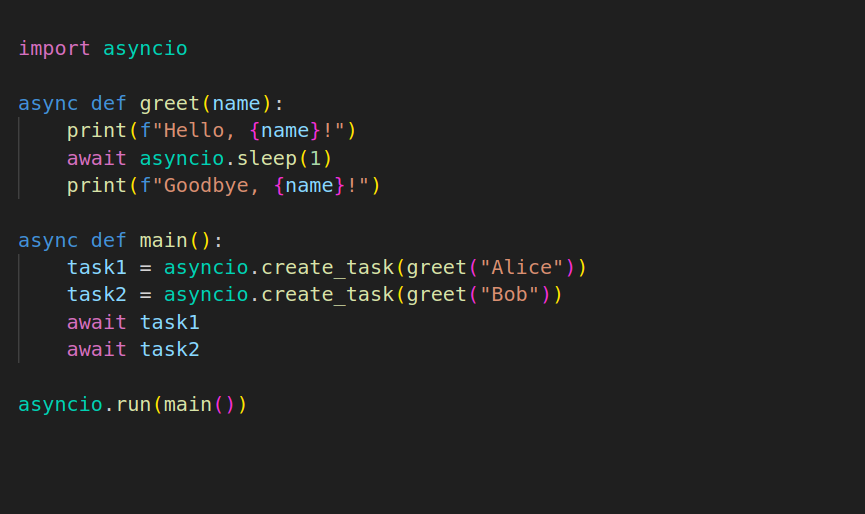
Coroutines Coroutines are functions defined using the async def syntax. They allow pausing and resuming their execution, enabling other tasks to run in the meantime. Here’s an example:
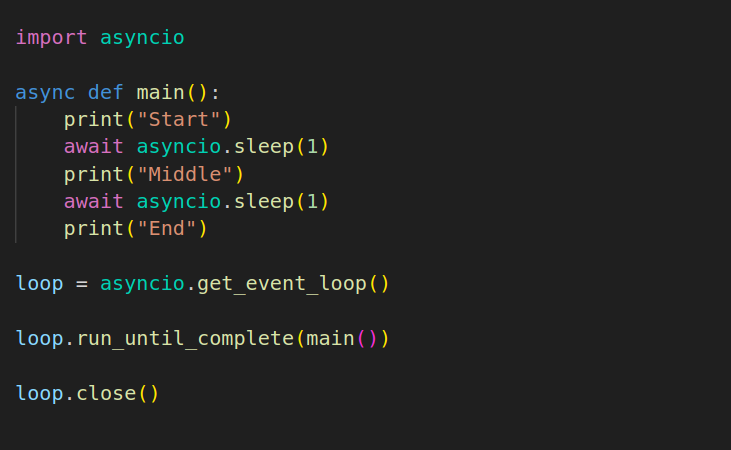
An event loop manages the execution of tasks and coroutines. It efficiently switches between tasks to achieve concurrency. Example of an event loop:
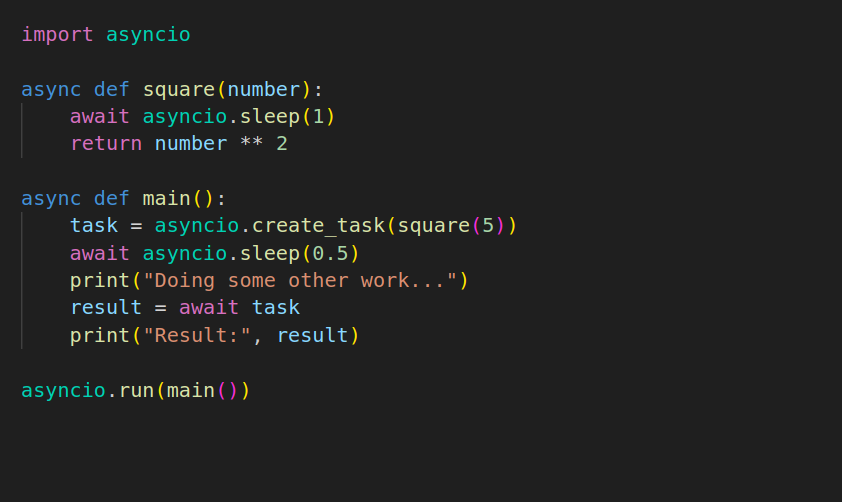
Tasks represent the execution of coroutines in an event loop. Futures are placeholders for values that will be available in the future, often associated with the result of an asynchronous operation. Example:
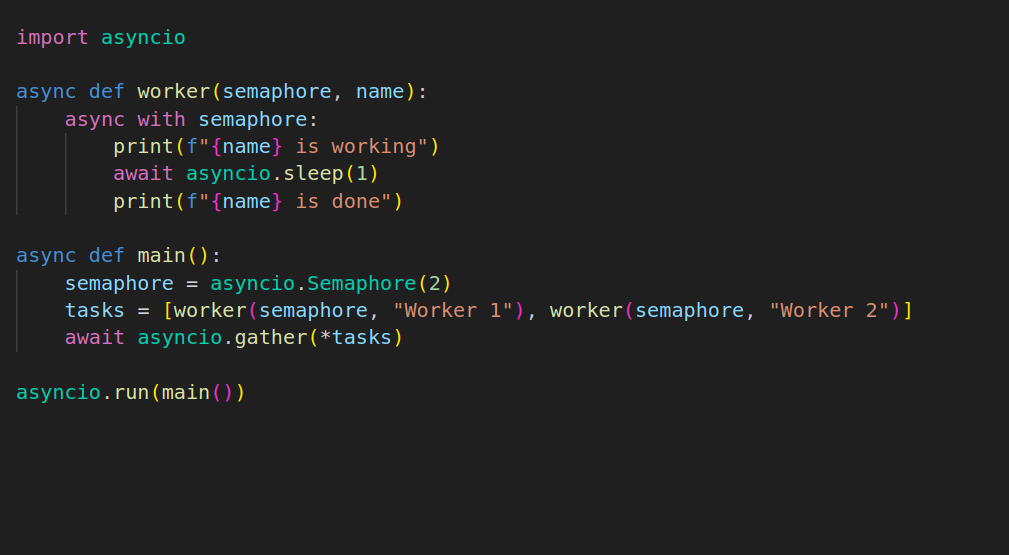
asyncio provides synchronization primitives like locks, semaphores, and queues to coordinate and control access to shared resources in async code. Example using a semaphore:
async def Functions Functions defined using async def are coroutines that can contain await expressions. They can pause their execution until the awaited operation completes. Example:
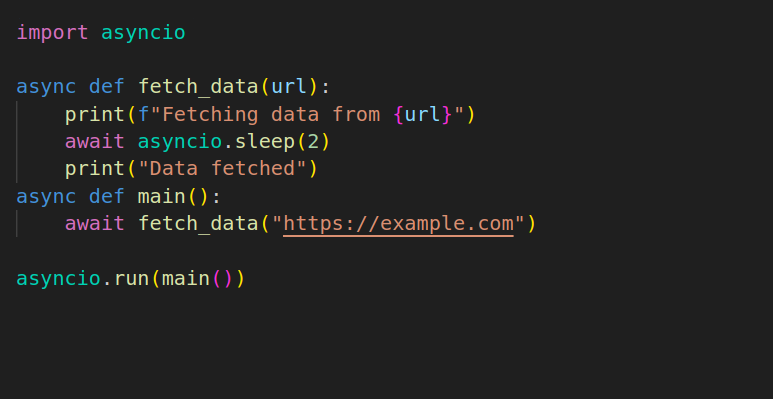
The await keyword is used within coroutines to pause execution until the awaited asynchronous operation finishes. It ensures that the event loop continues processing other tasks in the meantime.
Understanding the difference between concurrency and parallelism is crucial in async programming. Concurrency involves managing multiple tasks, while parallelism involves executing multiple tasks simultaneously using multiple CPU cores.
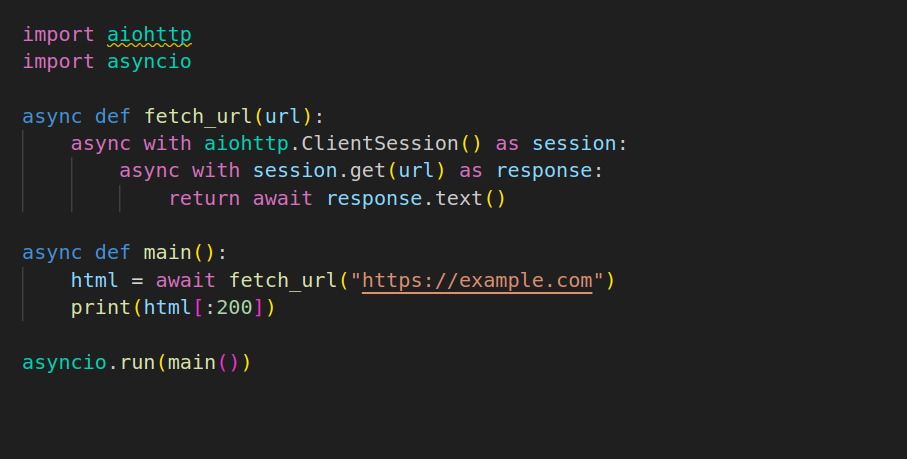
Network Operations Async programming is particularly useful for handling network operations, such as making HTTP requests, where waiting for responses can lead to significant time wastage. Example using aiohttp:
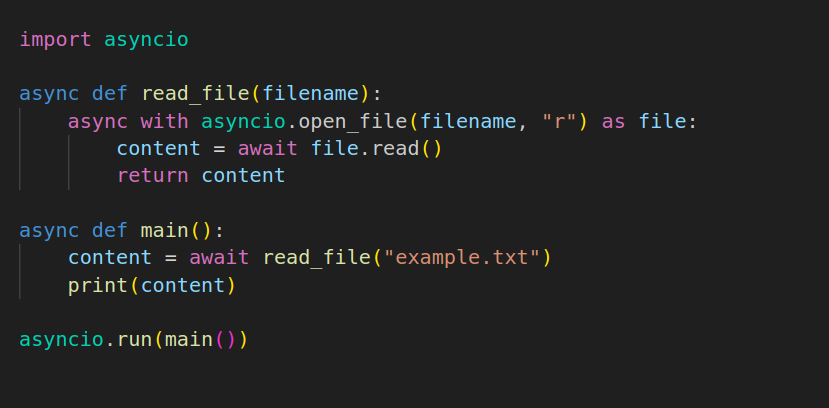
File I/O operations can be slow, especially when dealing with large files. Using async file I/O can help prevent blocking the event loop while waiting for disk operations to complete. Example:
Web scraping often involves making multiple requests to different websites. Asynchronous programming can improve the efficiency of web scraping by allowing concurrent retrieval of data. Example using beautifulsoup4 and aiohttp:
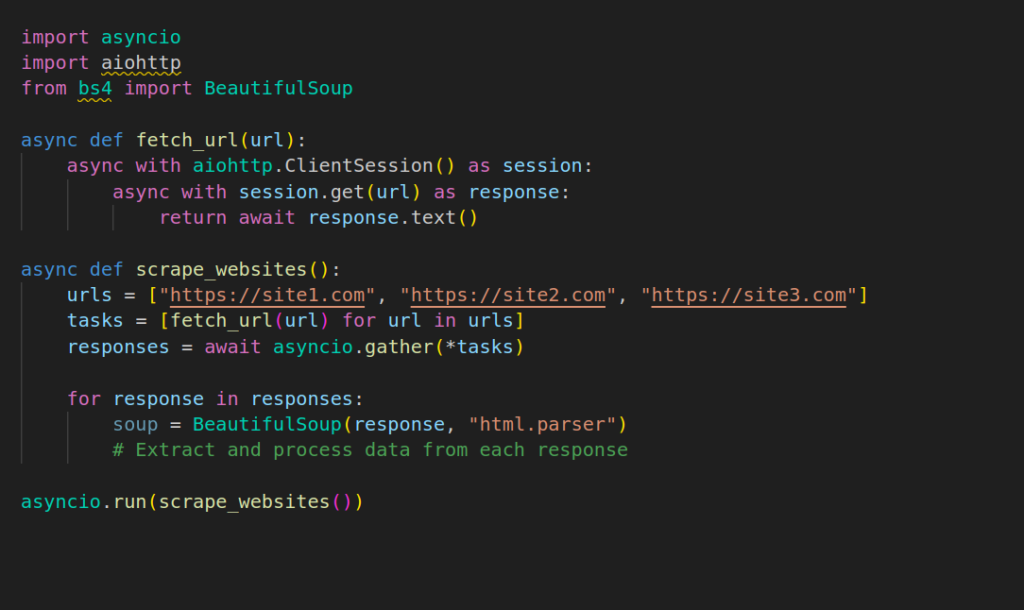
Avoiding Blocking Calls Blocking calls can halt the entire event loop. Using async-friendly libraries and techniques helps prevent such situations.
Proper error handling is crucial in async programming. Unhandled exceptions in coroutines can terminate the event loop prematurely.
Testing async code requires special consideration. Libraries like pytest-asyncio can help write effective unit tests for async code.
Asynchronous programming in Python using the asyncio library can greatly improve the efficiency of programs that involve I/O-bound and network-bound operations. By allowing tasks to execute concurrently, Python developers can create more responsive and scalable applications.


Get In touch
Our Testimonials:


Let Aviox Technologies give your idea the edge it deserves — with a free: